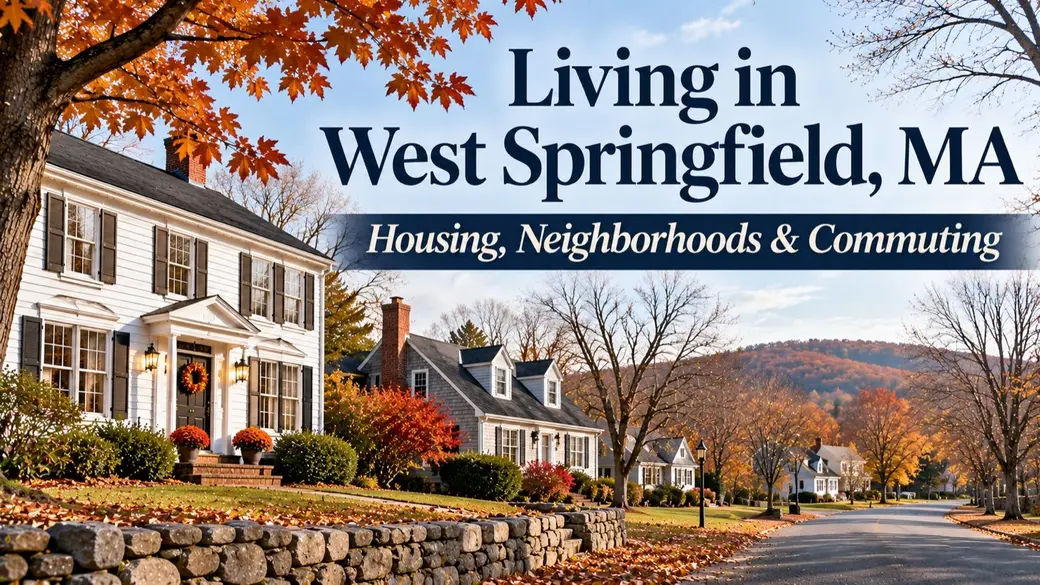
Living in West Springfield, MA: Housing, Neighborhoods & Commuting
Thinking about moving to West Springfield, Massachusetts? Located in Hampden County directly across the Connecticut River from Springfield, West Springfield offers a mix of established neighborhoods, older New England homes, ranches, colonials, condominiums, and properties with different lot sizes and settings. Its connections to Interstate 91, the Massachusetts Turnpike, Springfield, and nearby Connecticut make location and commuting important considerations for homebuyers.
But before buying a house in West Springfield, you'll want to understand how the neighborhoods differ, what property taxes will cost, how the school district works, and what to look for when inspecting a home.
I'm Michael Sakey, a Realtor with Real Broker, licensed in Massachusetts and Connecticut. I work with buyers and sellers throughout Hampden County, MA, and Hartford County, CT. In this guide, I'll walk through what makes West Springfield distinctive, how I evaluate its real estate market, and what you should consider before making an offer.
Where Is West Springfield, Massachusetts?
West Springfield is located in western Massachusetts, immediately west of the Connecticut River and the City of Springfield. It borders communities including Agawam, Holyoke, Westfield, and Springfield.
Despite the similar names, West Springfield is a separate municipality from Springfield, with its own local government, tax rates, and public school district.
The town sits near several important transportation routes, including Interstate 91, Interstate 90, also known as the Massachusetts Turnpike, Route 5, and Route 20.
For buyers who work in Springfield, Chicopee, Holyoke, Westfield, or North Central Connecticut, West Springfield may be worth including in a home search.
However, actual commuting convenience depends on the street and destination. A property near Route 5 or the highway network may have different travel patterns than a home on a residential road farther west.
I recommend driving your normal commute during the hours you expect to travel rather than relying only on the mileage displayed in a real estate listing.
Exploring West Springfield's Neighborhoods and Residential Areas
West Springfield has a varied housing landscape. Some sections developed around historic roads, commercial areas, and industrial corridors. Others include traditional suburban subdivisions, larger residential lots, and wooded surroundings.
Buyers should evaluate individual properties and streets rather than assuming that every part of town offers the same experience.
Mittineague
Mittineague is an established section of West Springfield associated with the western portion of town and Mittineague Park.
Residential streets in and around this area include a variety of older homes, ranches, capes, and other traditional housing styles.
The surrounding parkland and recreational facilities are notable local amenities, although access and proximity vary by address.
When considering an older property, pay particular attention to heating systems, roof condition, foundations, electrical service, and prior improvements.
A renovated kitchen can be appealing, but major mechanical systems often have a greater impact on ownership costs.
Merrick and the Memorial Avenue Area
Merrick is another recognized section of West Springfield, near the eastern part of town and the Springfield city line.
The Merrick and Memorial Avenue area includes older residential development, local businesses, commercial properties, and major travel corridors.
Homes can differ significantly in age, lot size, parking arrangements, and proximity to commercial activity.
If you're considering a property here, review the actual street conditions, traffic patterns, off-street parking, and access to nearby routes.
Properties near the Connecticut River or other waterways also deserve careful attention to flood mapping and any history of water intrusion.
Westfield Street and Surrounding Residential Areas
Westfield Street, part of Route 20, provides an important connection through West Springfield toward Westfield.
The surrounding areas include residential neighborhoods, commercial uses, and access to municipal recreation.
For properties near busier roads, it's worth visiting at different times of day to evaluate noise, traffic, driveway access, and the relationship between the home and nearby development.
Other Residential Streets and Subdivisions
West Springfield also includes residential streets away from its major commercial corridors, where buyers may find traditional colonials, ranches, split-level homes, contemporary properties, and larger lots.
These locations can offer different configurations and maintenance requirements.
Rather than choosing a neighborhood based on a general description, I encourage buyers to compare property condition, lot characteristics, commuting routes, and total ownership costs.
You can also explore my guide to living in Agawam or browse my other Western Massachusetts town guides.
How Much Do Houses Cost in West Springfield, MA?
Home prices in West Springfield depend on square footage, property condition, location, lot size, housing type, and current market conditions.
A smaller ranch that needs updating should not be compared directly with a larger, renovated colonial or a multi-unit property.
Similarly, a condominium with monthly association fees requires a different affordability analysis than a detached single-family residence.
For buyers searching in November 2026, I recommend reviewing current MLS listings and recent comparable closed sales rather than relying on a single undated online median.
Common Types of Homes in West Springfield
- Ranch homes: Often feature single-level living, with basement and garage arrangements that vary by property.
- Colonials: Traditional two-story homes with separate living and bedroom areas, sometimes with attached or detached garages.
- Capes: Compact New England designs that can have different upstairs layouts, ceiling heights, and renovation histories.
- Split-level and raised-ranch homes: Properties with multiple living levels and varying lower-level configurations.
- Condominiums: Attached or other association-managed housing requiring review of fees, reserves, insurance, and rules.
- Multifamily properties: Certain areas have two-family and other income-producing properties that require additional analysis of rents, expenses, tenancy, and financing.
When preparing an offer, I examine recent closed sales, current competition, days on market, property condition, and the difference between asking prices and actual transaction prices.
Automated valuation estimates may miss important factors, including deferred maintenance, renovation quality, and unusual layouts.
A property-specific comparative market analysis is usually much more useful than a broad online estimate.
West Springfield Property Taxes: What Buyers Need to Know
Massachusetts municipalities calculate property taxes using a dollar rate per $1,000 of assessed value. Unlike Connecticut, the rate is generally not described as a mill rate.
As of October 28, 2026, the West Springfield Assessor's Office publishes a fiscal year 2026 residential tax rate of $14.02 per $1,000 of assessed value.
The town's official assessor page does not yet publish a certified fiscal year 2027 residential rate. That means a buyer planning a November 2026 purchase should confirm the FY2027 rate directly with the Assessor's Office when it becomes available rather than assume the FY2026 rate remains unchanged.
Current information is available through the West Springfield Assessor's Office.
How Are Property Taxes Calculated?
The basic calculation is straightforward:
Taxable assessed value divided by 1,000, multiplied by the residential tax rate, equals the base annual property tax.
For example, consider a hypothetical property with a taxable assessed value of $350,000.
Using the published FY2026 residential rate of $14.02, its illustrative annual base property tax would be $4,907, or approximately $408.92 per month.
That is an example, not a prediction of the property's FY2027 tax bill. Exemptions, adjustments, or other applicable charges may change the actual amount.
Before buying, request the property's current assessment and tax information through the town's assessor resources.
Why Assessed Value and Sale Price May Differ
A property's municipal assessment isn't necessarily the same as its advertised listing price or eventual selling price.
Assessments are developed for property taxation using the municipality's valuation practices and applicable Massachusetts requirements.
Market prices reflect what buyers are willing to pay for a particular property under current conditions.
If you're comparing homes in West Springfield, Agawam, Westfield, or Springfield, look at the actual annual property taxes for each property and verify the current applicable tax rates.
Don't assume that a lower tax rate automatically means a lower tax bill, because assessed values also matter.
West Springfield Public Schools: Understanding the District
West Springfield Public Schools operates the town's public school district.
According to the district's official school directory for the 2026-2027 school year, its listed schools include:
- John Ashley School
- John R. Fausey Elementary School
- Memorial Elementary School
- Philip G. Coburn Elementary School
- Tatham Elementary School
- West Springfield Middle School
- West Springfield High School
These schools serve different grade levels, and placement should not be assumed from a nearby street or neighborhood name.
For the 2026-2027 school year, the district opened online enrollment and published an August 14, 2026 registration target to allow processing before the start of school.
Families enrolling after that date should contact the district for current instructions and placement information.
Before purchasing a home, confirm school assignments using the property's exact address through West Springfield Public Schools or the district enrollment office.
The Massachusetts Department of Elementary and Secondary Education also maintains official school and district profiles that buyers can consult for program information and other public data.
I recommend reviewing official district resources rather than relying on third-party rankings or assumptions about school assignments.
Things to Do in West Springfield: Parks and Local Amenities
West Springfield offers municipal parks, recreation facilities, and access to outdoor destinations throughout the Pioneer Valley.
Mittineague Park
Mittineague Park is one of West Springfield's major municipal recreation areas.
The town's official 2025 park map identifies approximately 325 acres with wooded and open trails, athletic facilities, playgrounds, disc golf, and community gardening opportunities.
The park also includes facilities for activities such as tennis, basketball, pickleball, and organized sports.
For buyers who enjoy hiking, gardening, or outdoor recreation, it's worth exploring the park and determining how conveniently it connects to the properties you're considering.
Park access, seasonal gates, registration requirements, and facilities may change, so consult the town's Parks and Recreation Department.
Bear Hole Watershed and Open Space
Bear Hole is another recognizable natural area associated with West Springfield's landscape and water-resource protection.
Public access, permitted activities, and trail conditions should be checked through official municipal resources before visiting.
When purchasing near conservation land or watershed property, buyers should confirm actual boundaries, easements, and restrictions rather than assuming surrounding land is privately usable.
The Big E and Eastern States Exposition
West Springfield is home to the Eastern States Exposition grounds, known for hosting The Big E and other events throughout the year.
For nearby property searches, major events can affect traffic and road activity during particular seasons.
If you're considering a home near the exposition grounds, visit the area during both ordinary traffic conditions and a scheduled event to understand the difference.
Shopping, Restaurants and Daily Errands
West Springfield has commercial areas along Riverdale Street, Memorial Avenue, and other major roads.
Nearby Springfield, Agawam, Holyoke, and Westfield provide additional retail and service options.
Before committing to a property, evaluate the actual drive to grocery stores, medical appointments, work, recreation, and other destinations you use regularly.
Commuting From West Springfield: I-91, Mass Pike and Connecticut
One of the practical considerations in a West Springfield home search is access to the regional highway network.
Interstate 91 connects the Springfield area north toward Holyoke and south into Connecticut. Interstate 90 provides east-west access across Massachusetts.
Routes 5 and 20 also serve important local travel functions.
Potential commuting destinations include downtown Springfield, Chicopee, Holyoke, Westfield, Enfield, Windsor Locks, and other communities throughout the Connecticut River Valley.
However, bridge crossings, highway interchanges, and traffic conditions can affect travel times.
I recommend checking three things before deciding on a location:
- Your actual commute: Drive the route during normal work hours and test the return trip.
- Highway access: Compare the property’s connection to I-91, I-90, Route 5, or Route 20.
- Daily convenience: Consider local traffic, intersections, shopping access, and driveway conditions.
If you work remotely, confirm internet service options at the specific address rather than relying on a townwide availability map.
For buyers comparing homes across the Connecticut border, differences in taxes, financing, closing practices, and commuting expenses also deserve attention.
What Should You Inspect Before Buying a Home in West Springfield?
West Springfield includes homes constructed in many different periods, making property-specific inspections particularly important.
Here are several areas I recommend evaluating:
- Foundations and basements: Look for cracks, moisture intrusion, drainage issues, and evidence of previous structural repairs.
- Roof and exterior: Review roofing age, flashing, gutters, siding, and water management.
- Heating systems: Determine the equipment age, fuel source, maintenance history, and expected replacement costs.
- Electrical systems: Investigate panel capacity, wiring conditions, and evidence of appropriate permits for upgrades.
- Water and sewer: Verify the utility connections serving the specific property.
- Older building materials: Consider potential lead paint, asbestos-containing materials, and other age-related concerns.
- Flood exposure: Review official mapping and property history, particularly near rivers, streams, or low-lying areas.
- Condominium obligations: Review association finances, insurance coverage, reserve funding, and any pending special assessments.
Don't assume a property is problem-free because the interior looks newly renovated. Professional inspections, documentation, and careful due diligence can reveal conditions that aren't visible in listing photographs.
Massachusetts Home Inspection Protections
Massachusetts regulations effective October 15, 2025 generally prohibit sellers and their agents from conditioning acceptance of an offer on a buyer waiving a home inspection, subject to defined exceptions.
These provisions are established under 760 CMR 74.00.
Buyers should discuss inspection timing, contingencies, and contract requirements with their real estate agent and attorney.
An inspection isn't a guarantee against future repairs, but it offers an important opportunity to understand the property's condition before proceeding.
Should You Buy in West Springfield or a Nearby Town?
West Springfield, Agawam, Westfield, Springfield, and neighboring communities offer different housing styles, property configurations, tax obligations, and commuting routes.
Rather than assume one town is universally preferable, I recommend comparing actual available properties based on your priorities.
Consider the complete monthly and long-term cost of ownership, including:
- Mortgage principal and interest
- Property taxes and insurance
- Heating and cooling expenses
- Maintenance and anticipated repairs
- Condominium or association fees, if applicable
- Commute and vehicle costs
If you're considering both Massachusetts and Connecticut, working with an agent licensed in both states can make the comparison easier.
You can explore more communities and homebuying topics through my real estate blog.
Frequently Asked Questions About Living in West Springfield, MA
Is West Springfield, Massachusetts a good place to live?
West Springfield offers varied residential neighborhoods, traditional New England homes, shopping, municipal parks, and connections to major regional roads. Whether it suits your needs depends on your budget, property preferences, commute, and lifestyle priorities.
What neighborhoods are in West Springfield, MA?
Recognized areas include Merrick and Mittineague, along with residential streets around Memorial Avenue, Westfield Street, and other sections of town. Housing characteristics vary by individual location.
How much do houses cost in West Springfield, Massachusetts?
Prices depend on property size, condition, type, location, and current market demand. Recent comparable closed sales and active MLS listings provide the most useful information for a specific home search.
What is the West Springfield residential property tax rate for FY2027?
As of October 28, 2026, the town's official Assessor's Office website publishes the FY2026 residential tax rate of $14.02 per $1,000 of assessed value. The certified FY2027 residential rate was not yet posted there. Buyers should confirm the newer rate directly with the Assessor's Office when available.
What public schools serve West Springfield, MA?
West Springfield Public Schools operates the town's public school district, including John Ashley, Fausey, Memorial, Coburn, Tatham, West Springfield Middle School, and West Springfield High School. Confirm school placement directly with the district using the property's address.
Is West Springfield convenient for commuting to Springfield or Connecticut?
West Springfield has access to Interstate 91, Interstate 90, Route 5, and Route 20. Actual travel times depend on the property's location, destination, traffic, and bridge or highway conditions.
Can I work with an LGBTQ+ inclusive Realtor in West Springfield?
Absolutely. Michael Sakey is an openly gay Realtor with Real Broker, licensed in Massachusetts and Connecticut, providing LGBTQ+ inclusive buyer and seller representation throughout Hampden County, MA, and Hartford County, CT.
Ready to Buy or Sell a Home in West Springfield, MA?
Choosing a home in West Springfield involves more than finding a property with the right number of bedrooms.
It's about evaluating the local market, understanding the condition of the home, reviewing the full ownership costs, and choosing a location that fits your everyday needs.
I'm Michael Sakey, Realtor with Real Broker, licensed in Massachusetts and Connecticut and serving Hampden County, MA, and Hartford County, CT.
As an openly gay Realtor, I'm also proud to provide LGBTQ+ inclusive real estate representation built around clear communication, professional service, and respect for every client.
Whether you're purchasing your first home, relocating, moving up, downsizing, or preparing to sell, I can help you evaluate current market conditions and develop a practical plan.
Let's talk about your West Springfield real estate goals. Visit MLSakey.com to connect with me, or browse my other Connecticut and Massachusetts real estate guides.
Categories
- All Blogs 25
- CT Real Estate 11
- Divorce Real Estate 1
- Enfield CT Real Estate, Hartford County Real Estate, Connecticut Real Estate, Home Buying, Moving to Connecticut 6
- estate sales 1
- First Time Home buyer Western Massachusetts 3
- Granby CT Real Estate, Hartford County Real Estate, Connecticut Real Estate, Home Buying, Moving to Connecticut 6
- Hampden County Real Estate 9
- Hartford County Real Estate 10
- Home buying in East Longmeadow MA 4
- Home buying in Springfield, Massachusetts 4
- Home Buying in Western Massachusetts 7
- Home buying in Westfield, Massachusetts 4
- LGBTQ+ Real Estate 1
- Longmeadow MA Real Estate 4
- moving to connecticut 10
- moving to Hartford County 4
- Moving to Western Massachusetts 8
- probate sales 2
- Somers CT Real Estate, Hartford County Real Estate, Connecticut Real Estate, Home Buying, Moving to Connecticut 6
- Suffield CT Real Estate, Hartford County Real Estate, Connecticut Real Estate, Home Buying, Moving to Connecticut 6
- Western Mass Real Estate 10
- windsor CT 2
Recent Posts