Buying a Home in Massachusetts vs. Connecticut: What Buyers Need to Know in 2026

Buying a Home in Massachusetts vs. Connecticut: What Buyers Need to Know in 2026
I work in one of those markets where a state line can run right through a perfectly logical home search.
If you work around Springfield, Chicopee, Enfield or the I-91 corridor, you might reasonably consider homes in both Massachusetts and Connecticut.
I'm Michael Sakey, a Realtor® with Real Broker licensed in both states, so here's something I tell cross-border buyers frequently:
Don't choose the state first. Choose the financial and lifestyle criteria first—then see which homes satisfy them.
The Buying Process Isn't Identical
This surprises buyers who have previously purchased in only one state.
Massachusetts' official homebuying guidance emphasizes the Offer to Purchase followed by a Purchase and Sale Agreement, with attorneys involved in preparing and agreeing to the P&S. The state specifically advises buyers to consult an attorney before signing legal documents. Massachusetts Government
Connecticut has its own contracts, disclosures and transaction practices. Connecticut's Department of Consumer Protection specifically provides guidance on purchase contracts, representation agreements, deposits, inspections and required property disclosures. CT.gov
The lesson isn't that one system is better.
It's that crossing the state line changes the process.
Property Taxes: Don't Compare Rates Alone
This is one of my favorite examples.
A Massachusetts town might publish a tax rate around $19 per $1,000 while a Connecticut municipality publishes a mill rate in the 30s or 40s.
That doesn't mean the Connecticut property automatically has twice the taxes.
Connecticut generally assesses real estate at 70% of value, while Massachusetts assessments operate differently.
Instead, compare the actual annual tax bill on each property.
That's the number going into your monthly housing expense.
First-Time Buyer Assistance Exists in Both States
Connecticut buyers may have access to CHFA programs, including DAP and, for eligible borrowers while funds are available, Time To Own. CHFA
Massachusetts buyers have their own options.
MassHousing currently advertises down-payment assistance of up to $30,000 for eligible first-time buyers using a MassHousing Mortgage, with assistance available statewide subject to program requirements. MassHousing
So if you're a first-time buyer, don't assume the state line determines affordability before a lender actually runs both scenarios.
Housing Stock Can Change Quickly Across the Border
Consider a search involving:
Enfield and Suffield, Connecticut
versus
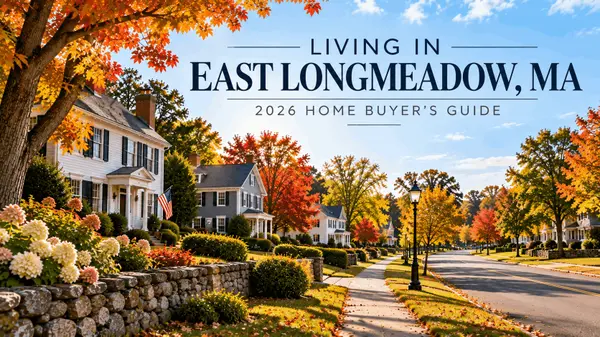
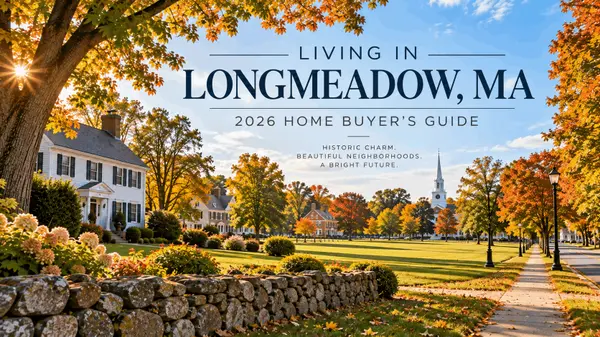
Longmeadow and East Longmeadow, Massachusetts.
They're geographically close.
But the available houses, taxes, lot sizes, municipal systems and prices can be quite different.
That's exactly why cross-border buyers benefit from looking at the whole region first.
What About Older Homes?
You'll find plenty on both sides.
Northern Connecticut and Western Massachusetts contain substantial stocks of Colonials, Capes, ranches, Victorians and early-to-mid-20th-century houses.
The state line doesn't change my inspection priorities.
I'm still looking carefully at:
Roof. Heating. Cooling. Electrical. Plumbing. Foundation. Drainage. Windows. Chimney. Insulation. Renovation history.
The prettiest kitchen in the world doesn't replace a 35-year-old boiler.
Which State Is Cheaper?
There isn't a responsible universal answer.
You need to compare:
Purchase price + taxes + insurance + financing + utilities + condition + expected maintenance + commute.
Then consider what type of property you're getting.
A $450,000 house in one town might need $75,000 of near-term work.
A $475,000 house across the border might already have a newer roof, heating system, electrical service and windows.
The cheaper asking price didn't necessarily produce the cheaper house.
So Where Should I Buy?
Here's how I'd approach it.
If your job and personal life allow you to live on either side of the border, don't artificially shrink the search before you've seen what your money buys.
Look at both.
Run the actual numbers.
Drive the commute.
Compare the properties.
Then decide.
That's considerably more useful than starting with “Massachusetts or Connecticut?”
FAQ
Can the same Realtor represent me in Connecticut and Massachusetts?
Yes, provided that agent is properly licensed in both states. I hold both licenses.
Is buying a home in Massachusetts the same as Connecticut?
No. Contract and closing practices differ, including Massachusetts' Offer-to-Purchase/Purchase-and-Sale structure. Massachusetts Government
Do both states offer first-time-buyer assistance?
Yes, subject to program eligibility and availability. Connecticut uses programs through CHFA, while Massachusetts has programs through MassHousing and other sources. MassHousing
Should I compare tax rates or actual tax bills?
Actual property tax bills provide a much more meaningful comparison.
Searching Both Sides of the State Line?
This is exactly the kind of search I handle.
I'm Michael Sakey with Real Broker, licensed in Connecticut and Massachusetts, serving Hartford County, CT and Hampden County, MA, along with surrounding northern Connecticut and Western Massachusetts communities.
We can look at the entire region first and let the houses and the numbers tell us where you should buy.
Categories
- All Blogs 16
- CT Real Estate 4
- Enfield CT Real Estate, Hartford County Real Estate, Connecticut Real Estate, Home Buying, Moving to Connecticut 4
- estate sales 1
- First Time Home buyer Western Massachusetts 2
- Granby CT Real Estate, Hartford County Real Estate, Connecticut Real Estate, Home Buying, Moving to Connecticut 4
- Hampden County Real Estate 5
- Hartford County Real Estate 4
- Home buying in East Longmeadow MA 2
- Home buying in Springfield, Massachusetts 2
- Home Buying in Western Massachusetts 5
- Home buying in Westfield, Massachusetts 2
- Longmeadow MA Real Estate 2
- moving to connecticut 4
- moving to Hartford County 1
- Moving to Western Massachusetts 4
- probate sales 2
- Somers CT Real Estate, Hartford County Real Estate, Connecticut Real Estate, Home Buying, Moving to Connecticut 4
- Suffield CT Real Estate, Hartford County Real Estate, Connecticut Real Estate, Home Buying, Moving to Connecticut 4
- Western Mass Real Estate 6
Recent Posts