
Living in Longmeadow, MA: A Local Realtor’s Guide to Buying a Home in 2026
Living in Longmeadow, MA: A Local Realtor’s Guide to Buying a Home in 2026
If you’re searching for a home in the Springfield area but want an established residential community right along the Connecticut border, Longmeadow deserves a serious look.
It’s also a particularly interesting market for buyers whose lives don’t fit neatly inside one state.
You might work in Springfield but have family in Connecticut. One person in the household might work in Massachusetts while another commutes south. Or you may simply be trying to determine whether your budget buys the better house in Hampden County, Massachusetts or northern Connecticut.
I’m Michael Sakey, a Realtor® with Real Broker licensed in both Massachusetts and Connecticut, and that cross-border search is one of the advantages of the market I serve.
Here’s what I’d want you to understand before buying a home in Longmeadow in 2026.
Key Takeaways for Longmeadow Homebuyers
- Longmeadow is in Hampden County, Massachusetts, immediately north of Connecticut.
- The housing stock includes many established and older homes, including historically significant properties.
- Longmeadow’s FY2026 residential property-tax rate is $19.32 per $1,000 of assessed value.
- The historic district includes the Longmeadow Green and surrounding areas; certain exterior alterations visible from a public way can require Historic District Commission approval.
- Buyers crossing from Connecticut should understand that Massachusetts taxes, contracts and closing procedures are different.
- Longmeadow maintains parks and recreation spaces ranging from neighborhood facilities to the 84-acre Turner Park.
- The specific house still matters more than the town’s reputation: condition, taxes, location and total ownership cost should drive the decision.
What Is It Like to Live in Longmeadow, MA?
Longmeadow has a noticeably established residential character.
Drive through town and you’ll see mature trees, traditional New England architecture, older homes, residential streets and areas that reflect generations of development rather than one large wave of modern construction.
The historic Longmeadow Green is an especially visible part of that identity.
Longmeadow was first settled in 1644, and the town notes that many 18th-century homes remain part of its architectural heritage.
But Longmeadow isn’t a museum.
It’s a modern residential community built around housing that spans multiple eras.
And that creates both opportunity and responsibility for buyers.
What Kinds of Homes Will You Find in Longmeadow?
Depending on inventory and budget, buyers may encounter:
- Colonials
- Capes
- Ranches
- Tudors
- Traditional New England homes
- Mid-century properties
- Larger architecturally distinctive residences
- Condominiums and attached housing
One of the mistakes buyers sometimes make with established communities is assuming that two houses with similar square footage should have similar values or ownership costs.
They may not.
A substantially renovated older Colonial and an architecturally similar home with decades-old mechanical systems can be two entirely different financial propositions.
Condition matters.
So does the quality of the renovation.
What Should I Look for When Buying an Older Longmeadow Home?
The kitchen is probably not the first thing I’m looking at.
I want to know what’s happening behind it.
When evaluating an established Longmeadow property, pay particular attention to:
Electrical systems. Has the service been updated? What wiring remains?
Plumbing. Determine what has been replaced and what may be original or older.
Heating and cooling. Understand the equipment, fuel, age and distribution system.
Roof and chimney. Masonry and flashing deserve attention along with the roof covering itself.
Windows and insulation. Older architecture can have a very different energy profile from modern construction.
Basement moisture. Look for evidence of previous water intrusion and understand drainage around the property.
Previous renovations. A beautiful renovation is more valuable when you understand what work was performed and whether permits were required.
An older home doesn’t have to be scary.
An older home you don’t understand can be.
What Are Longmeadow Property Taxes in 2026?
For Fiscal Year 2026, Longmeadow’s residential property-tax rate is:
$19.32 per $1,000 of assessed value.
For a simplified example, if a property were assessed at $500,000:
$500,000 ÷ 1,000 × $19.32 = approximately $9,660 per year
That works out to approximately:
$805 per month
before any applicable exemptions or adjustments.
That’s an illustration—not the tax quote for a specific property.
When we evaluate a house, we should verify its current assessment and actual tax bill.
Why You Shouldn't Compare the Longmeadow Tax Rate Directly With Connecticut Mill Rates
This is particularly important for cross-border buyers.
You might see Longmeadow at $19.32 per $1,000 and a Connecticut town with a mill rate in the 30s or 40s and conclude that Massachusetts automatically has dramatically lower property taxes.
That comparison can be misleading.
Connecticut generally assesses real estate at 70% of fair market value, while Massachusetts uses its own assessment system.
The useful comparison isn't:
“Which town has the lower tax rate?”
It's:
“What are the actual annual property taxes on the homes I'm considering?”
If we're comparing a $500,000 home in Longmeadow with a similarly priced home in northern Connecticut, I want the actual tax bill for each property in the calculation.
That's how we make an apples-to-apples comparison.
Does Longmeadow Have a Historic District?
Yes—and buyers considering property around the Green should know about it.
The Longmeadow Historic District was established in 1973 and includes the Longmeadow Green and surrounding areas, including Town Hall and the old section of the cemetery.
If a property is within the district, certain exterior changes visible from a public way require review and a Certificate of Appropriateness from the Historic District Commission.
That matters.
If you're imagining replacement windows, an addition, major exterior renovations—or even an accessory dwelling unit—verify the rules before assuming the project can be completed as envisioned.
Historic protections can help preserve architectural character.
They also create an additional layer of due diligence for a buyer.
Can I Add Onto or Change a Longmeadow Property?
Maybe.
But don't assume.
Longmeadow maintains zoning bylaws and an official zoning map, and zoning regulates issues such as land use, lot size, frontage and the location and design of structures.
So if your plan is:
“I love the house, and someday I'll just add a giant primary suite.”
—or—
“We'll build another structure in the backyard.”
—we should investigate that idea before the purchase, not afterward.
This is true in virtually every municipality, but it becomes especially important when the future project is part of your justification for buying the property.
What About Accessory Dwelling Units?
Massachusetts has changed its statewide treatment of accessory dwelling units, but local zoning, building requirements, site conditions and—in Longmeadow's historic district—historic review can still affect what can actually be built on a particular property.
If an ADU is part of your plan, we should evaluate that property specifically.
Don't buy a house based on an imaginary future apartment until we've done the homework.
Parks and Outdoor Space in Longmeadow
Longmeadow isn't simply houses.
The town maintains multiple recreational facilities and parks.
Bliss Park includes walking trails, an outdoor pool, baseball field, playground, basketball court and clay tennis courts.
Greenwood Park includes an outdoor pool, pickleball courts and playing fields.
Laurel Park has a pond and walking trails.
Turner Park includes 84 acres of wooded terrain along with athletic space.
And Wolf Swamp Park includes 18 acres of playing fields.
For a homebuyer, this is another reason to evaluate location within town.
A house isn't simply “in Longmeadow.”
It's located a certain distance from the places you'll actually use.
Longmeadow vs. East Longmeadow
These towns share part of a name.
That doesn't make them interchangeable.
The housing stock, street patterns, lots, commuting routes and day-to-day experience can differ.
If both fit your budget and commute, I'd rather show you houses in both communities than tell you which one you're supposed to prefer.
The properties themselves often make the distinction much clearer.
Longmeadow vs. Northern Connecticut
This is where being licensed in both states becomes useful.
Longmeadow sits immediately north of Connecticut, so buyers relocating to the greater Springfield area don't necessarily need to choose a state before they start looking at houses.
We can compare communities on both sides of the border.
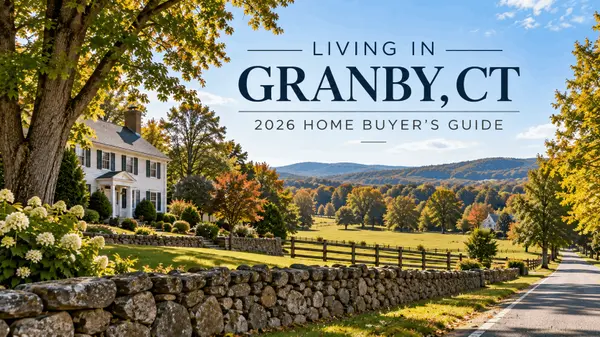
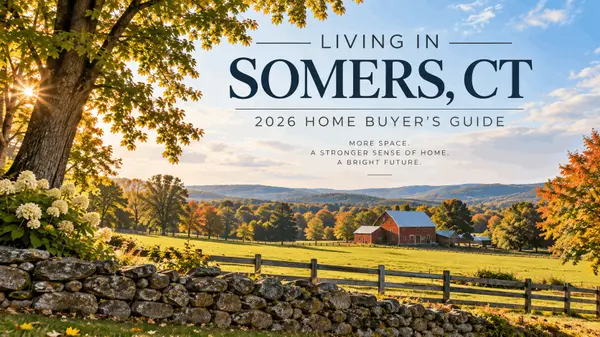
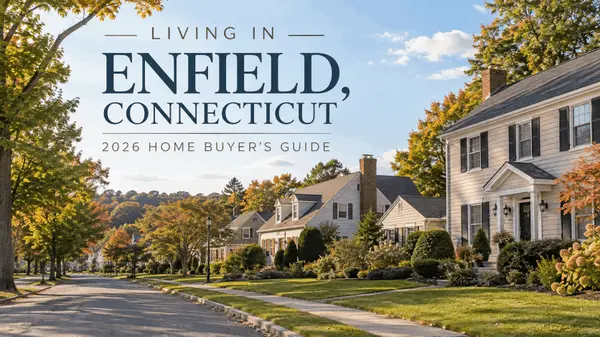
For example, a search could reasonably include Longmeadow and East Longmeadow in Massachusetts while also considering Enfield, Suffield or Somers in Connecticut, depending on the buyer's needs.
The decision may ultimately come down to:
- Purchase price
- Property taxes
- House condition
- Lot size
- Commute
- Utilities
- State-specific closing costs
- The actual property you like best
That's much more useful than deciding that Massachusetts or Connecticut is automatically “better.”
Is the Massachusetts Home-Buying Process Different From Connecticut?
Yes.
There are meaningful differences in contracts, attorneys, customary procedures and the progression from offer through closing.
If you've purchased in Connecticut before, don't assume your Massachusetts transaction will work exactly the same way.
Likewise, Massachusetts buyers moving south shouldn't assume Connecticut follows the same process they're accustomed to.
This is one reason I like working across both markets.
The state line doesn't have to end your home search.
It simply changes some of the rules.
Frequently Asked Questions About Living in Longmeadow, MA
What county is Longmeadow in?
Longmeadow is in Hampden County, Massachusetts, immediately north of the Connecticut border.
What is Longmeadow's property-tax rate for 2026?
For Fiscal Year 2026, Longmeadow's residential property-tax rate is $19.32 per $1,000 of assessed value.
Does Longmeadow have historic homes?
Yes. Historic architecture is a visible part of Longmeadow's housing stock, including homes dating back to the 18th century.
Does Longmeadow have a historic district?
Yes. The Longmeadow Historic District includes the Green and surrounding areas. Certain exterior alterations visible from a public way require Historic District Commission review.
Is Longmeadow close to Connecticut?
Yes. Longmeadow directly borders Connecticut, making it especially relevant to buyers comparing northern Connecticut and Western Massachusetts.
Can one Realtor show me houses in both Longmeadow and Connecticut?
Yes—if that Realtor holds the appropriate licenses in both states. I'm licensed in both Massachusetts and Connecticut, so my clients can compare homes on either side of the state line without changing agents.
Thinking About Buying or Selling in Longmeadow?
I'm Michael Sakey, a Realtor® with Real Broker licensed in Massachusetts and Connecticut, serving buyers and sellers throughout Hampden County, Massachusetts and Hartford County, Connecticut, along with the surrounding Western Massachusetts and northern Connecticut market.
If you're considering Longmeadow—or trying to compare Longmeadow, East Longmeadow, Enfield, Suffield or other nearby communities—I can help you evaluate the entire picture.
Not just the list price.
We'll look at the house, condition, taxes, location, commute and total ownership cost together.
Because the goal isn't to convince you that one side of the state line is better.
It's to figure out which home makes the most sense for you.
Categories
- All Blogs 11
- CT Real Estate 2
- Enfield CT Real Estate, Hartford County Real Estate, Connecticut Real Estate, Home Buying, Moving to Connecticut 2
- estate sales 1
- Granby CT Real Estate, Hartford County Real Estate, Connecticut Real Estate, Home Buying, Moving to Connecticut 2
- Hampden County Real Estate 1
- Hartford County Real Estate 2
- Home Buying in Western Massachusetts 1
- Longmeadow MA Real Estate 1
- moving to connecticut 2
- Moving to Western Massachusetts 1
- probate sales 2
- Somers CT Real Estate, Hartford County Real Estate, Connecticut Real Estate, Home Buying, Moving to Connecticut 2
- Suffield CT Real Estate, Hartford County Real Estate, Connecticut Real Estate, Home Buying, Moving to Connecticut 2
- Western Mass Real Estate 2
Recent Posts